Written by Korie Samuel
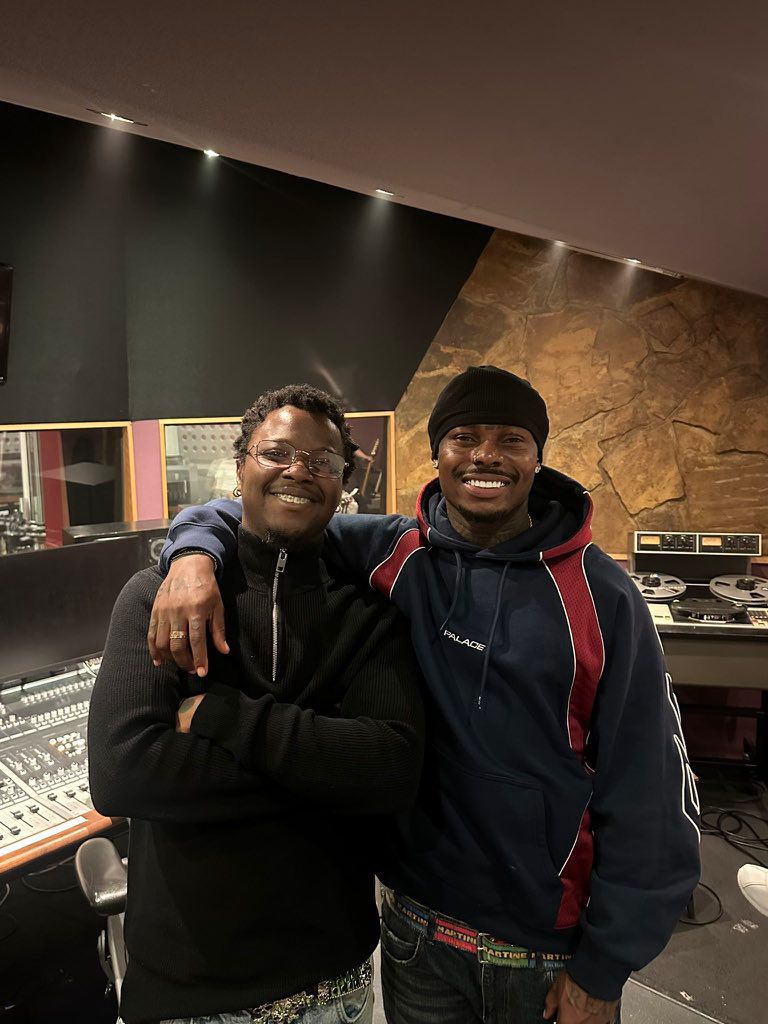
The first moment is simple: a hug. No music yet, no cameras in their faces, just two collaborators reconnecting. It’s a small scene, but it explains a lot. Before M$NEY becomes an album, before any song is finished, there is already something in place between Asake and Magicsticks that can’t be manufactured in a session. Familiarity. Trust. A shared sense of direction.
Spend a little time around Magicsticks and you begin to understand how central he is to that direction. He doesn’t talk about “making beats” in the casual way the term is often used. For him, the process starts with feeling, with an emphasis on what the music should carry before it says anything. From there, every choice matters: the bounce of the drums, the space between sounds, the way a melody sits without doing too much. These aren’t background decisions. They are the foundation that shapes how the artist exists on the record.
That dynamic becomes clearer in the studio. During the final stages of what will become “Worship,” the work unfolds slowly, almost quietly. Ideas are tested, pulled apart, rebuilt. Nothing is treated as final too early. What looks like a normal recording session is actually a conversation, one where producer and artist are both adjusting, both listening, both deciding what the record needs. Magicsticks isn’t waiting for direction; he’s actively shaping it, while Asake, a perfectionist, ensures that everything stays true to the central vision.
By the time the project reaches its final stages, that shared vision is already locked in. In sessions with Nana (Compozers), the executive producer, the focus shifts from creation to clarity. Tracks are revisited, tightened, and sometimes stripped back. The goal isn’t to add more, but to keep only what truly represents the sound they’ve built. It’s a careful process, one that turns a collection of songs into something more intentional.
There’s a different kind of energy when the music is played back. Listening to a record like “Forgiveness,” the room grows quieter. The work is no longer about tweaking; it’s about feeling. You can see it in the small reactions: a nod, a pause, the way attention sharpens. This is where they test whether the music lands the way it was meant to.
And then, eventually, the room opens up again. When the team plays “MCBH” during the mixing and mastering sessions, the mood shifts completely. People move, react, connect. What started as a private idea becomes something shared. That’s the final step in the process, the moment when the music leaves the team that built it and begins to belong to everyone else.
M$NEY carries that journey in its sound. It reflects a partnership where the roles are clear, but the boundaries are fluid. Asake brings the voice, the energy, the instinct. Magicsticks brings quiet consistency and high-quality production; through that, they shape the world the music lives in, giving it its bounce, its clarity, and its staying power. Together, they create something that feels complete, music that doesn’t just happen, but is carefully, deliberately made. Almost divine. Like a religion. Like M$NEY.