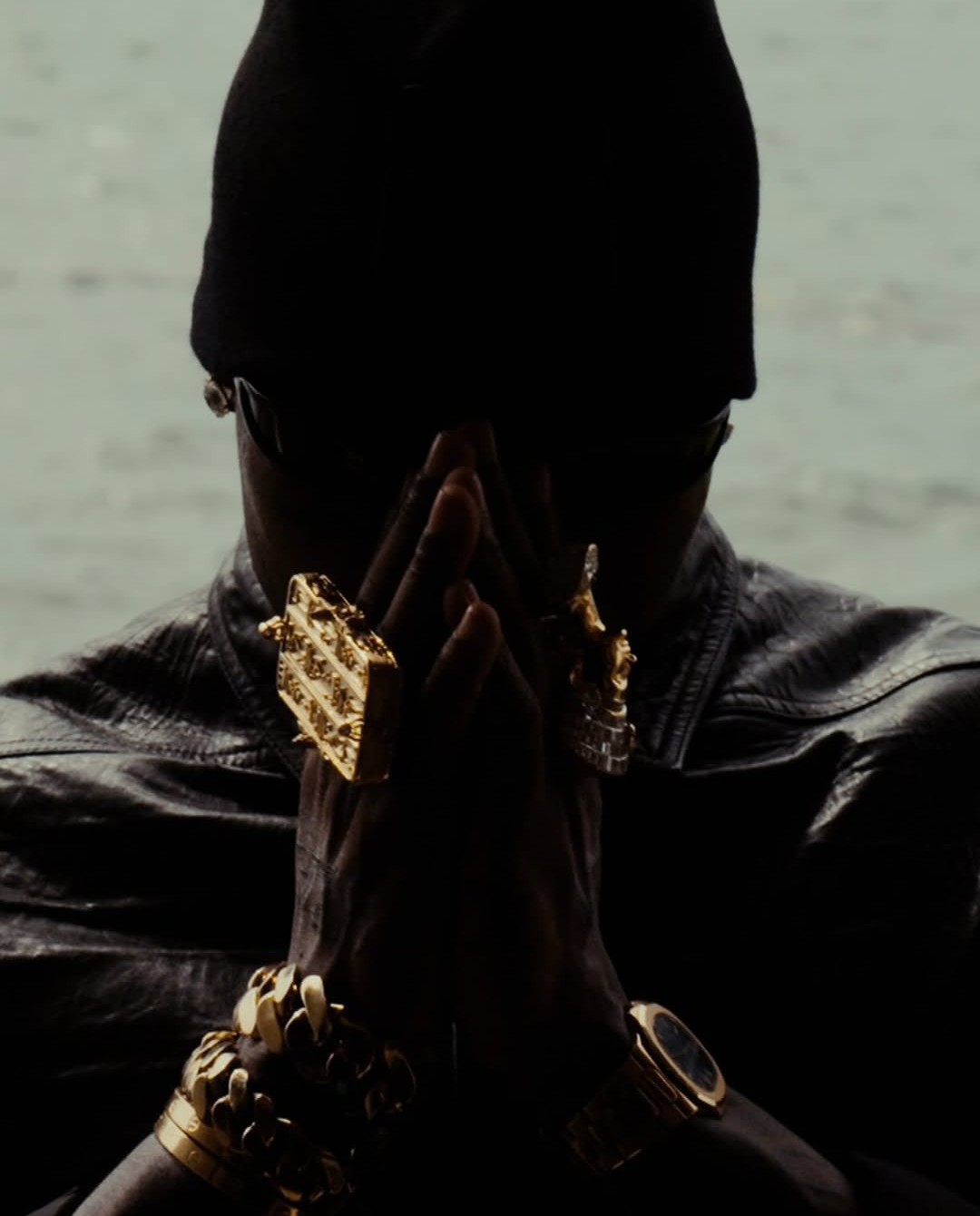
Four albums in, Nigeria's most-streamed artist reflects on the true cost of success.
At the beginning of Asake’s fourth studio album, there’s a powerful moment that sets the tone for his current journey. Asake is known for always keeping his intros brief, so for 26 seconds, a choir sings in isiZulu. There are no drums or catchy beats yet, just the rich, harmonious voices creating a sense of community and purpose. This opening is a thoughtful choice, especially for an album named after money. It feels almost like a prayer. For Asake, that makes sense. He got rich, then got free, and the first thing he wanted to do was pray.
That freedom is significant context. In February 2025, Asake left YBNL Nation to launch his own imprint, Giran Republic. M$NEY is his first album under this label. For someone who built his entire mythology around the accumulation of success, who named himself Mr. Money with the Vibe before the world even knew his face, the move to independence was less a gamble and more a logical conclusion. The bag was secured. Now what?
M$NEY is his answer, and it is a more complicated one than the title suggests.
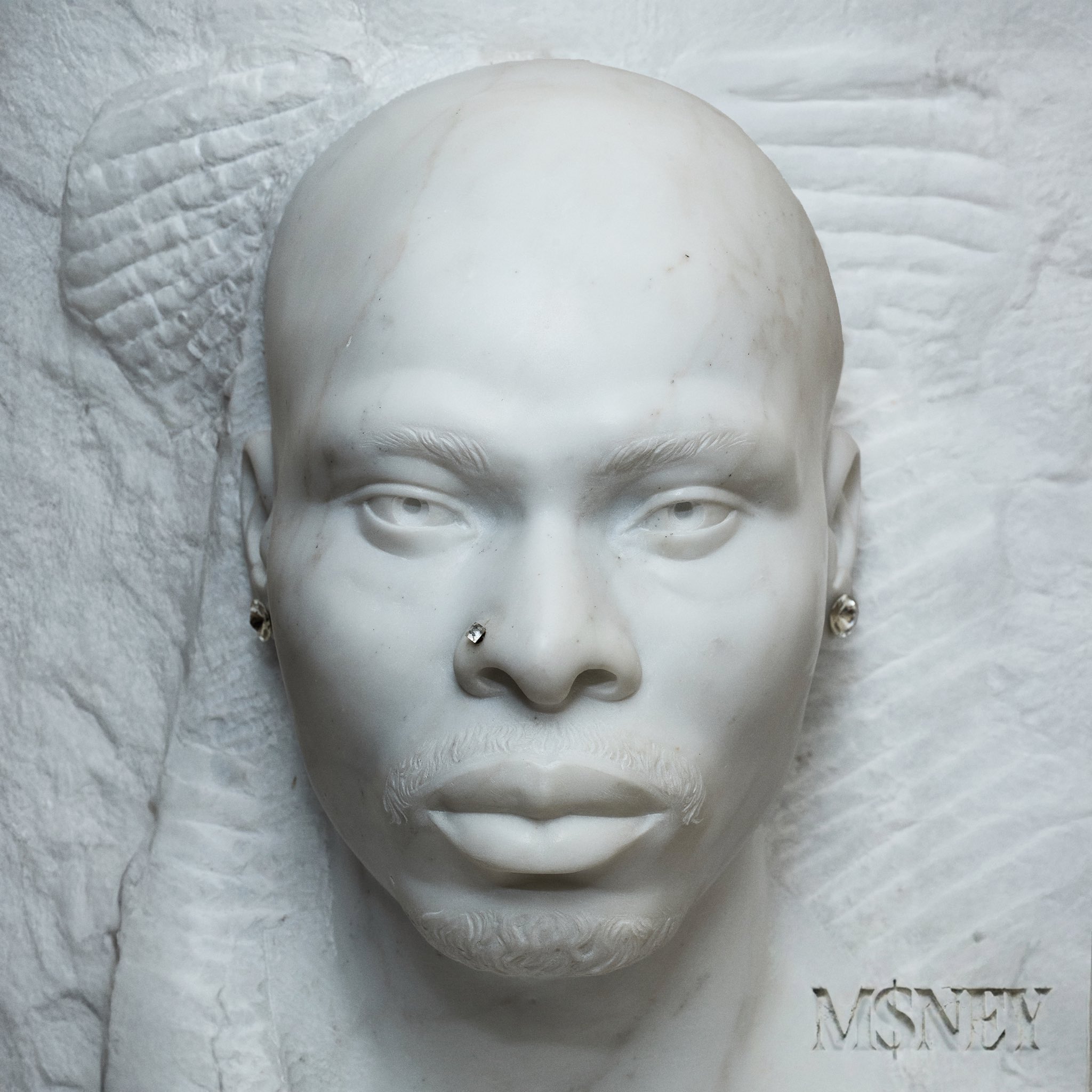
On paper, the album reads like a flex. The rollout leaned openly into the display of wealth, from curated visuals to a listening party hosted at a private jet hangar. The sequential unraveling of the marble sculpture of Asake by Iraqi-Dutch artist Athar Jaber — the album cover, the press shots, the whole aesthetic grammar of this era communicates one thing: arrival. Not the hustle toward it, but the settled, Sunday-morning feeling of already being there.
But to read M$NEY purely as an ostentatious flex is to miss the quieter anxiety running underneath it. Here, money is as much about gratitude, growth, peace of mind, and even survival as it is about what sits in your account. This album feels like a man looking at everything he has gained and quietly asking himself what it all truly means.
On “Worship” and “Gratitude,” the two songs that follow, he doubles down on that tension. Asake is less interested in the flex than in the accounting, tallying what God gave him, what the streets cost him, and what he still owes.
The spirituality on M$NEY is insistent. A man who seemingly has everything and still keeps returning to God is clearly searching for something beyond success itself.
Sonically, the album is his second most geographically restless. There are debates about whether M$NEY offers enough lyrically, but expecting a deeply cerebral or life-altering project misses the point entirely. This is not an album chasing profundity at every turn. It is laid-back, immersive music, the kind of project that asks you to settle into its textures rather than dissect every line for revelation. It is a combination of Afrobeats with elements of jazz, amapiano, and live choral performances. “Asambe” with Kabza De Small goes full amapiano, of course. “Badman Gangsta” samples Amerie’s 2005 “1 Thing.” “Worship” with DJ Snake pushes into festival-ready EDM. The ambition is global. There are moments on this album that are built for an orchestra pit, and that’s clearly what Asake is reaching for. Most importantly, the core of his identity remains intact even as he scales it, refines it, and pushes it toward something larger. But the most memorable ones are the mellower ones. “Rora” slows everything down with trumpet and saxophone, Asake singing lower about patience and walking together. “Forgiveness,” “Gratitude,” “Wa,” these are the songs that open up on first listen, and they still carry the marrow of what made you fall in love with him in the first place.
Gone (mostly) is the frantic street energy that defined Mr. Money with the Vibe, Work of Art, and Lungu Boy. Fans who came up on those will feel the absence of that particular urgency. M$NEY marks a step back into a safer, more recognizable framework.
Asake said as much himself: “M$NEY is a reflection of my spiritual and creative journey. Everything flows from a place of gratitude to God, and every moment that’s shaped me.”
Taken on those terms, the album is coherent and honest. It is not trying to be his loudest album. It is trying to be his most grounded. It may not hit as instantly as his earlier work, but its measuredness stays with you.
There is also something to be said for an artist who, at the peak of his commercial run, the most-streamed artist on Spotify Nigeria, three albums deep, two Grammy nominations, more entries on the Billboard U.S. Afrobeats Songs chart than anyone, refuses to manufacture urgency he doesn’t feel. The album debuted with 42.2 million streams on Nigerian Spotify, the biggest opening in the platform’s history in the country. The numbers confirm what the music suggests: his audience has grown with him, and they’re willing to sit inside the luxury.
M$NEY is Asake no longer chasing wealth as a primary objective, but documenting, with some confusion and a great deal of prayer and gratitude, what it feels like to live inside it. The questions it raises are more interesting than the answers it gives. For an artist of his stature, that might be enough.